

Every holiday season, people talk about bringing a cat "home for the holidays." Our first featured cat of the season is a reminder that the best homes aren't built in a rush. They're built with patience.
Meet Tabitha
Tabitha is a sweet 2 year old girl with a beautiful medium coat in a sharp black and white tuxedo. She came into MADACC as a stray, so we don't know her story before the shelter. What we do know is the story she's telling us now.
She loves chin scratches and head rubs. She's spayed, microchipped, and current on her vaccines. She isn't a fan of being held yet, but that could change once she's out of the shelter, and in a safe environment with the right person.
Shelter life can be a lot for Tabitha. When things feel rushed, her first instinct is to look for a way out. But give her a quiet moment and a little patience, and you'll meet a sweet, curious cat who just wants to feel safe.
Her Perfect Match
Tabitha is looking for a calm, patient person who understands that trust grows when a cat gets to choose. If that sounds like you, she's ready to meet you.
What she's looking for:
A calm, patient person
A quiet home with no young children
Chin scratches and head rubs (her favorites)
Someone who lets her decide when she's ready to be held
A slow intro to the home, people, and any other pets (we don't know yet how she does with other animals)
The details:
Spayed, microchipped, and current on vaccines
Meowaukee® covers the $12 Milwaukee County license fee
Her adopter gets a free behavior consult from Meowaukee® to help her settle in
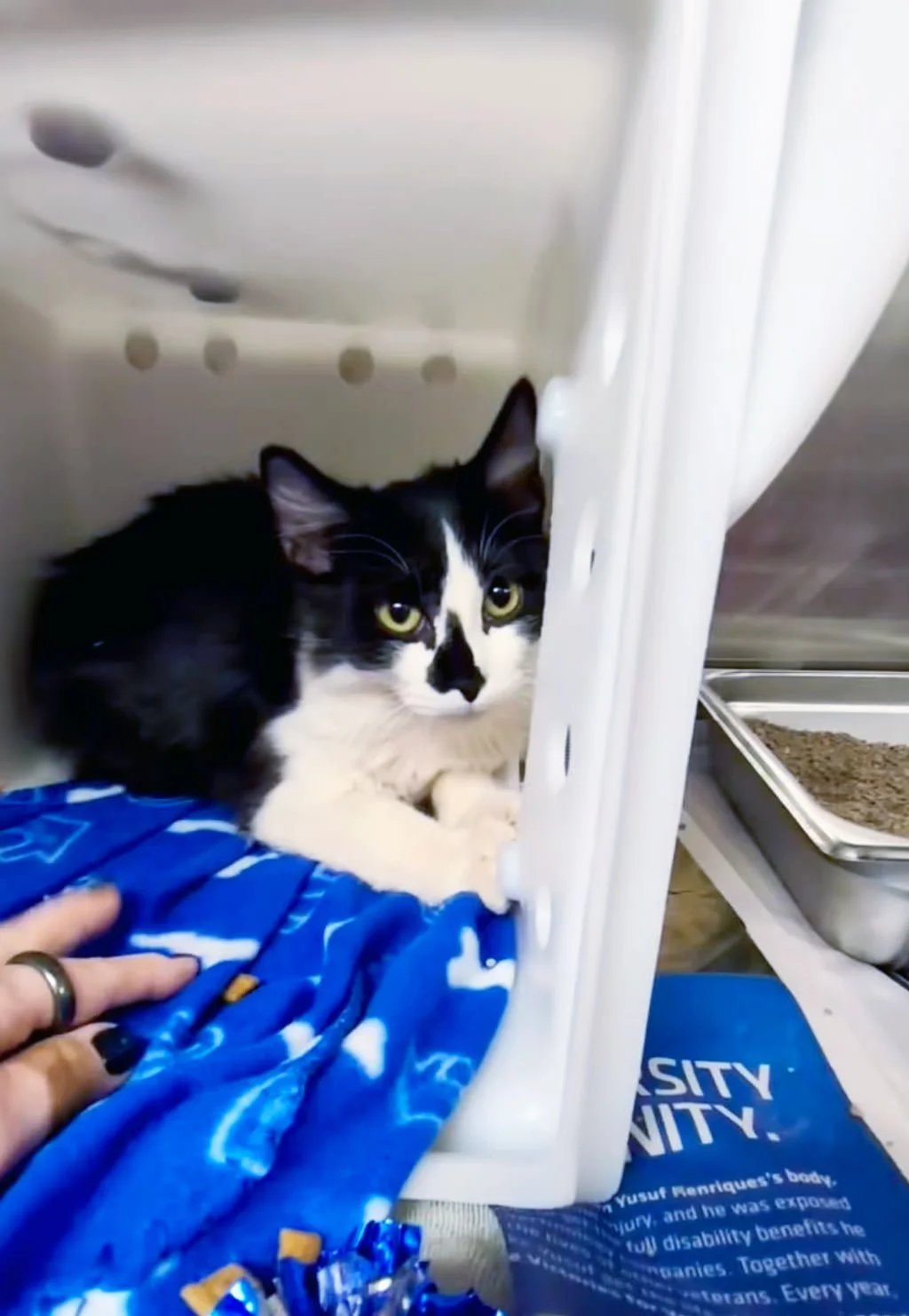
Want to get to know Tabitha a little better before you meet? Here's what's behind her cautious side, and how to help a cat like her feel at home.
Why some cats look for the exit
When a cat feels unsafe, getting away is the most natural response there is. Cats will generally only fight when there's no way out. As solitary hunters, cats tend to handle stress by putting distance between themselves and whatever worries them.
The shelter itself adds to that stress. Research has linked shelter living with higher physical and psychological distress in cats and dogs. And a study from Maddie's Institute found that how a cat acts in a shelter often isn't how they'll act somewhere calmer.
So when a cat like Tabitha wants space, she's not being "difficult." She's coping the best way a cat knows how.
What patience looks like
The cats who seem the most guarded often open up the fastest when nobody pushes. The ASPCA recommends a "considerate approach"
Skip reaching for, leaning over, or picking up the cat
Let her choose when to interact, which helps her learn to trust you
Watch her body language and pause if she seems stressed
Maddie's Fund suggests sitting quietly nearby and letting a shy cat investigate you on her own terms, while avoiding anything that might startle her. Calm energy is Tabitha's favorite kind.
About not being held
Plenty of cats would rather not be scooped up, and that's completely normal. Many cats simply don't enjoy being restrained. Some cats can get more comfortable with handling through a slow, positive approach, but their preferences still deserve respect.
A good habit with any cat is a quick consent check before petting. Offer your hand and let her sniff, but sniffing alone isn't a yes. If she rubs against your hand or leans in, she's inviting you to pet. If she turns away or seems distracted, give her space. Tabitha already knows what she likes: chin scratches and belly rubs, please.
Bringing Tabitha Home
Many shelters use the "3 days, 3 weeks, 3 months" guideline for new cats:
First 3 days: everything is new and overwhelming
Around 3 weeks: she starts settling into your routine
Around 3 months: home starts to really feel like home
Your new cat may act differently than she did at the shelter as she adjusts to your home. To help her settle in:
Start with one safe room. Shelter cats are used to small spaces, so one quiet room with food, water, a litter box, hiding spots, and a perch helps them adjust faster.
Let her set the pace. Open up the rest of the house gradually. If she seems overwhelmed, let her go back to her safe room for a few days and try again.
Mind the doors. Some newly adopted cats look for an exit while they adjust, so keep doors closed and be careful coming and going.
Check the basics. Hiding for a few days is normal. Just make sure she's eating, drinking, and using the litter box.
Go slow. Plan a gradual introduction to new parts of the home, new people, and other pets in the home. Use your free behavior consult from us to help her settle in.
Why Tabitha Matters To Us
Cats like Tabitha are the reason behind our Meow Year's Resolution. Through Jan 1st, $10 from every item purchased from the Meowaukee® store helps launch our cat behavior programs with our first Milwaukee shelter. The goal is helping shelters better understand and help cats like Tabitha, so a stressful moment never becomes the label that keeps a good cat from finding a good home.
Meowaukee® is an LLC, and purchases aren't tax deductible.
Resources for Adopters
Whether you adopt Tabitha or another cat who needs a little extra time, bookmark these resources:
MADACC Welcome Home Booklet for cats: MADACC's own guide for new adopters, downloadable from their adoption page.
ASPCA: Understanding Fear in Cats: how to spot fear and help a nervous cat build trust.
Maddie's Fund: Helping a Shy or Fearful Cat Adjust: safe room setup and step by step introductions.
Maddie's Fund: Cats Afraid of Anything New: what to do if your cat takes a step back while settling in.
Humane Society of Sonoma County: The 3, 3, 3 Rule: what to expect in the first days, weeks, and months.
Edmonton Humane Society: The Cat Consent Test: a printable guide to asking before you pet.
Kinship: Why Your Cat Doesn't Like Being Held: the reasons, plus gentle ways to build comfort.
VCA Animal Hospitals: Fears and Phobias: a vet's guide to fearful behavior and when to get help.
Meowaukee® behavior consult: free for Tabitha's adopter. We'll help you build a settling in plan that fits your home.
Meow means more here. 🖤🤍
