Spotless Bowls, Healthier Cats: What You Need to Know
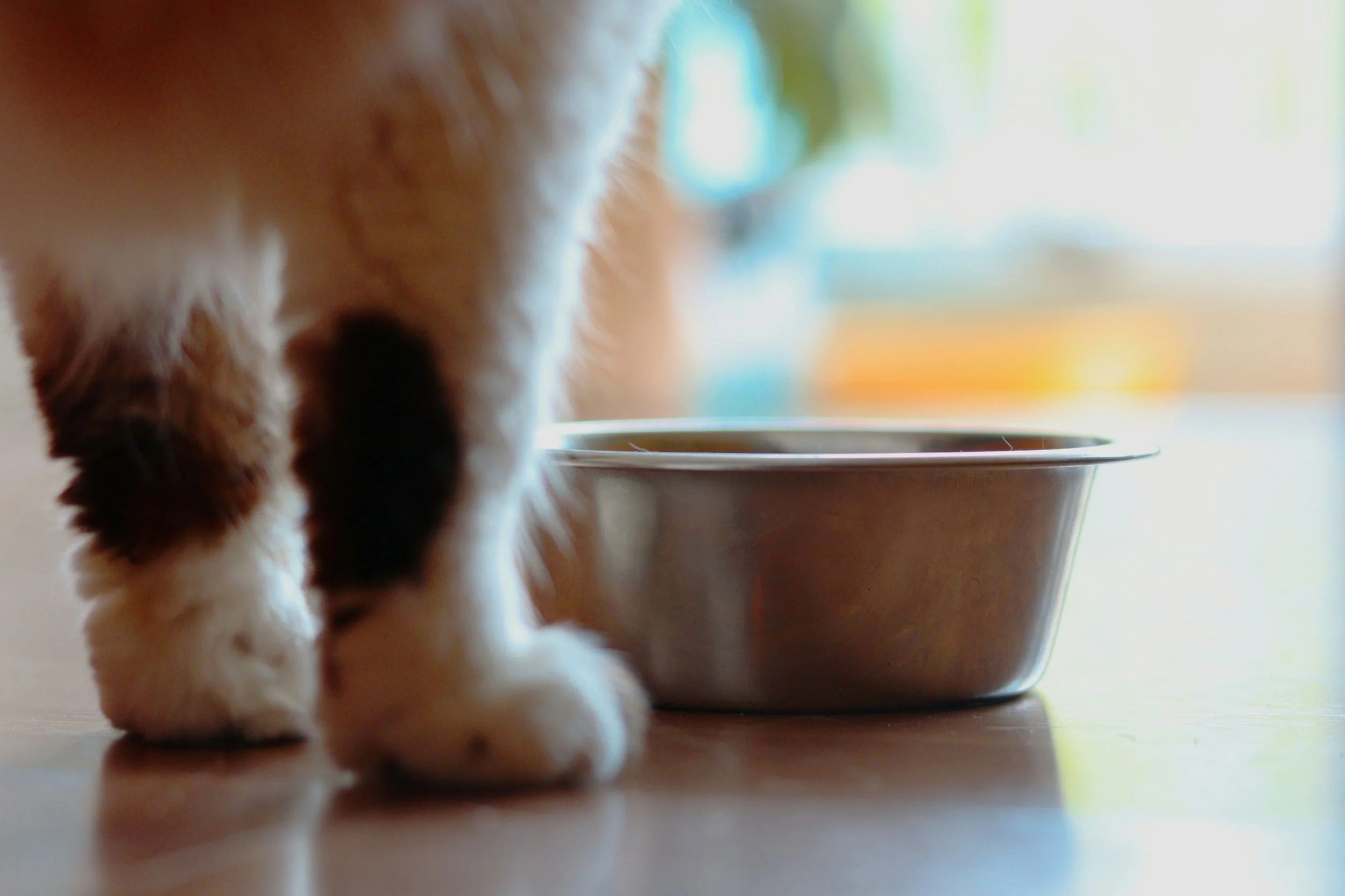
You clean the litter box. You sweep up the stray granules that escape onto the floor. You lint roll and pick the cat hair off the blanket. But when's the last time you washed your cat's food dish or water bowl?
Imagine drinking water from the same glass for weeks without rinsing it. The water would start tasting off, and you'd probably start feeling a little off too. Cats are in the same boat. Your cat may not be as obvious as say, a dog, and leave the water bowl empty and covered in slobber, but they still need a regularly refreshed, clean dish just the same.
A clean bowl keeps your cat healthier, which means fewer surprise vet visits down the road. A dirty dish can affect your cat’s gums, teeth and skin. You know that ring of grime around the edge of the bowl? That’s one of the most common causes of feline acne.
The cleanliness of your cat's bowls plays a real role in their health, and a quick rinse every now and then isn't quite cutting it.
Why a Clean Bowl Matters
A study by the National Sanitation Foundation found that pet bowls rank among the dirtiest spots in the average home. Bacteria like salmonella and E. coli can build up quickly, and water bowls are especially prone to collecting algae and grime if they're not washed regularly.
A dirty bowl can also draw in ants and other pests, irritate your cat's gums and the skin around their mouth, and pass bacteria along to the humans handling the bowl too. The fix is simple: a quick daily wash goes a long way.
Picking the Right Bowl
Not all bowls are created equally. First and foremost, make sure you’re using a bowl that's wide and shallow enough to keep your cat’s whiskers comfortable. Secondly, you’ll want to consider material. Here’s our thoughts:
Stainless steel is sturdy, affordable, dishwasher-safe and easy to sanitize
Glazed Ceramic is heavy, helps keep food and water cool, is dishwasher-safe and easy to sanitize.
Glass doesn't hold onto odors, is dishwasher-safe and easy to sanitize. Worth flagging though is fragility: glass can chip or crack, so be sure to choose sturdy, food-grade glass and inspect it regularly.
We do not recommend using plastic bowls. Plastic scratches easily, and those tiny grooves are the perfect hiding spot for harmful bacteria. In addition, bacteria build up causes bowls to start to stink over time. Cats have a sharp sense of smell, so this can turn them off from their food and make mealtime even trickier for picky eaters.
Daily Routine
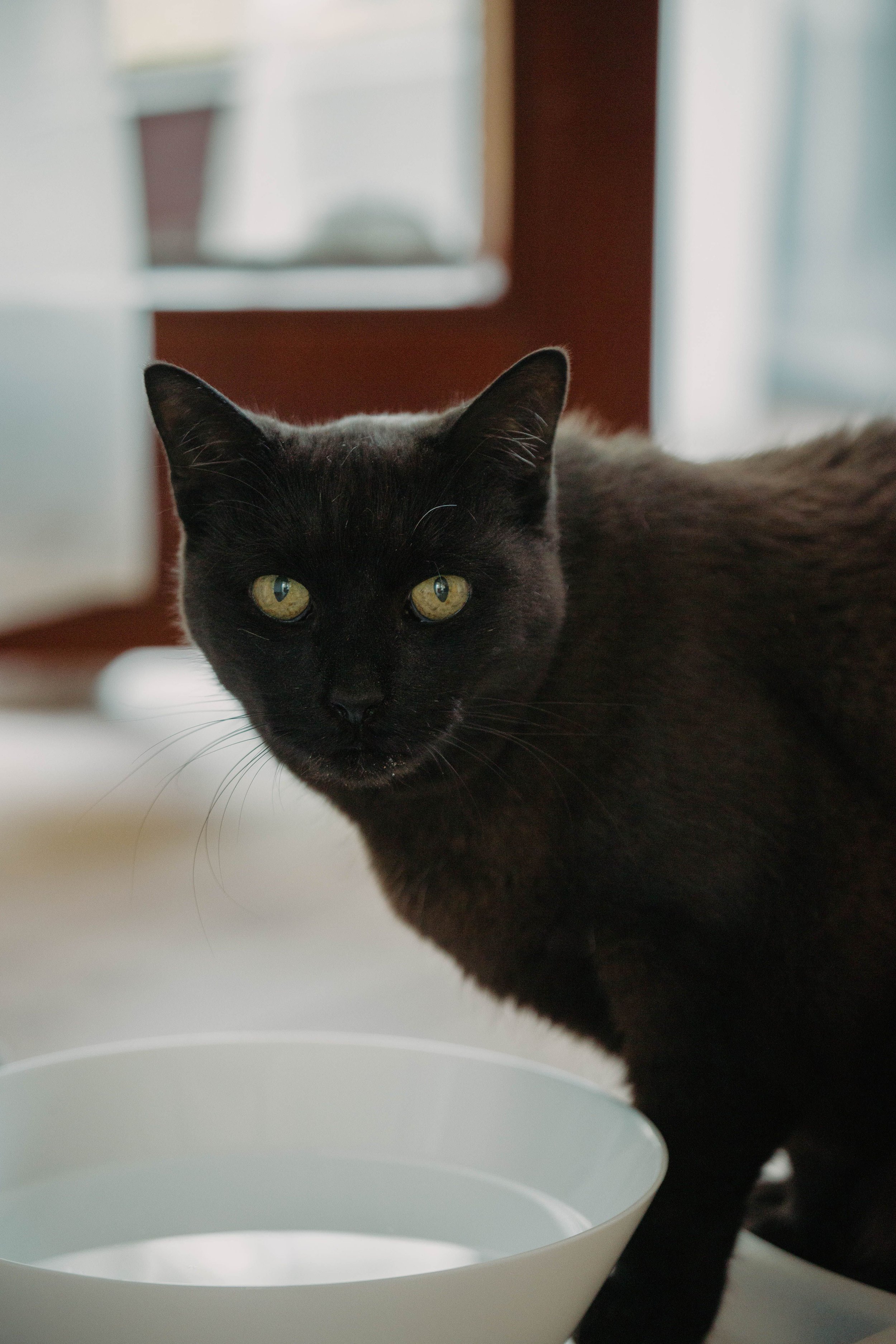
Wash food and water bowls every day with regular dish soap. Soak in warm, soapy water, scrub away any residue, then rinse and let air dry. It only takes a minute, and it makes a real difference, since cats are sensitive enough to skip a meal entirely if a bowl smells off to them.
Weekly Deep Clean
Even a bowl that looks spotless can be holding onto bacteria your daily wash doesn't fully clear. Once a week, disinfect bowls with a solution of about ½ cup of bleach to a gallon of water. Let them soak for ten minutes, then rinse thoroughly and allow to air dry.
Note: If you reach for a multi-surface cleaner or disinfecting wipe instead of diluted bleach, check the label first. Skip anything containing phenols (sometimes listed as part of a longer ingredient name, like "2-Phenylphenol"). They're common in household disinfectants, but they're toxic to cats, so they have no place near your cat's bowl.
Dishwasher Option
For dishwasher-safe bowls, clean and disinfect these in the dishwasher on the highest temperature or sanitize setting, and heat-dry rather than air-dry.
For Raw Diets
If your cat eats a raw diet, their bowl needs extra attention. Raw food carries a higher risk of bacteria like salmonella and E. coli, so a thorough clean after every single use is essential. When feeding a raw food diet, we recommend using dishwasher-safe bowls so you can effectively clean and sanitize them after every meal.
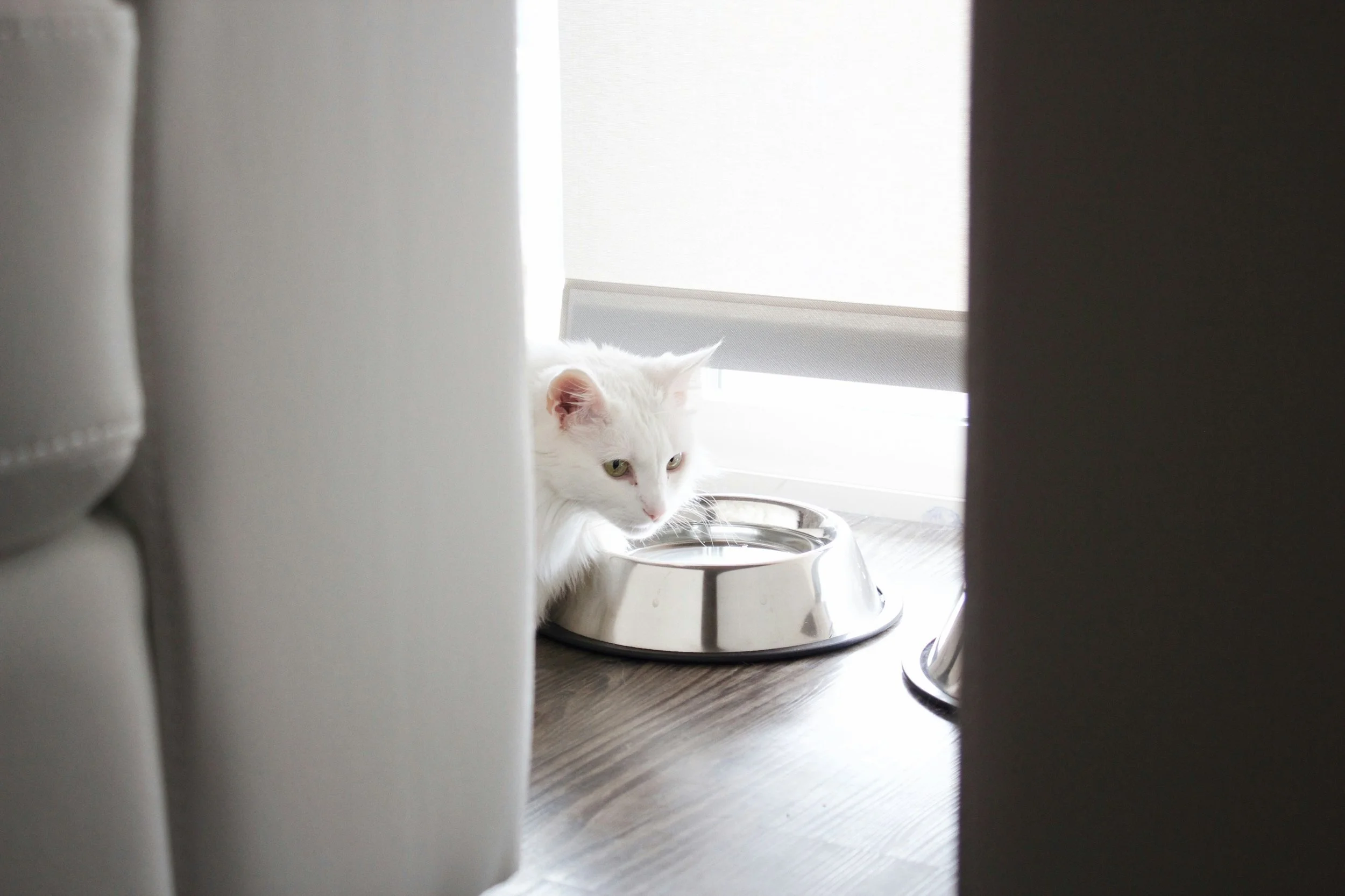
A clean bowl is a small habit with a big payoff: happy, healthy, and hydrated cats.
Based on guidance from the National Sanitation Foundation, the FDA, the CDC, and veterinary review via Cat Food Advisor, with additional research on glass bowls via Preventive Vet and Cat in the Box, and on cat-safe disinfecting via the CDC.